
What is Everyone-Virtuoso-Everyday?

This Fellowship will drive a further ambitious leap forward in thinking and practice by seeking to shape—and create—new forms of AI material—algorithms, interfaces and embodiment—through the pursuit of answers to a complex question: in what ways can we make life better for all with interactive digital-physical objects that channel their physical, emotional, cognitive and even spiritual capabilities as they make sense of and choreograph their lives. Our approach is one then that sees AI innovation driven by a deep consideration of those energies.

We use the phrase Everyone-Virtuoso-Everyday (EVE) to express the form of the interactive AI systems we are interested in, the context of their use and their outcomes. The work will involve innovating and evaluating instruments that will be mastered by those who learn to use them. People will use these instruments to “play out” their rich lived experiences and through this create performances that platform deep engagements, insights and understandings for themselves and others, enhancing everyday needs for connection, contribution and contentment.

The EVE paradigm focuses on non-expert users in their everyday contexts. For example, an inspiring piece of work is the PeopleLens—a sight assistance service—to enable a boy, blind from birth, to orchestrate a playful social situation (see video below).

While one of the threats to the adoption or efficacy of AI is certainly the lack of consideration of what it means to be a human and a preoccupation or idolisation of the machine as a higher power, there is another growing concern that the Fellowship will also address. Through our work over the last decade we have come to call this the “Designed in California” problem; i.e., the predominant design ethos of digital systems is shaped by the global-California that includes mainstream, affluent, educated, privileged users across the world – from Mumbai to Swansea. In this Fellowship, then, wewill diversify and broaden the inclusion of voices less heard in AI innovation: those located in the Global South in locations such as the slums of Nairobi, townships of Cape Town and the favelas of Brazil. But you don’t have to go far from where the team is based—in Swansea—to find communities who are digitally excluded.

Events and Activities

A selection of the events, workshops and activities completed so far in the Fellowship.

  • December 2024

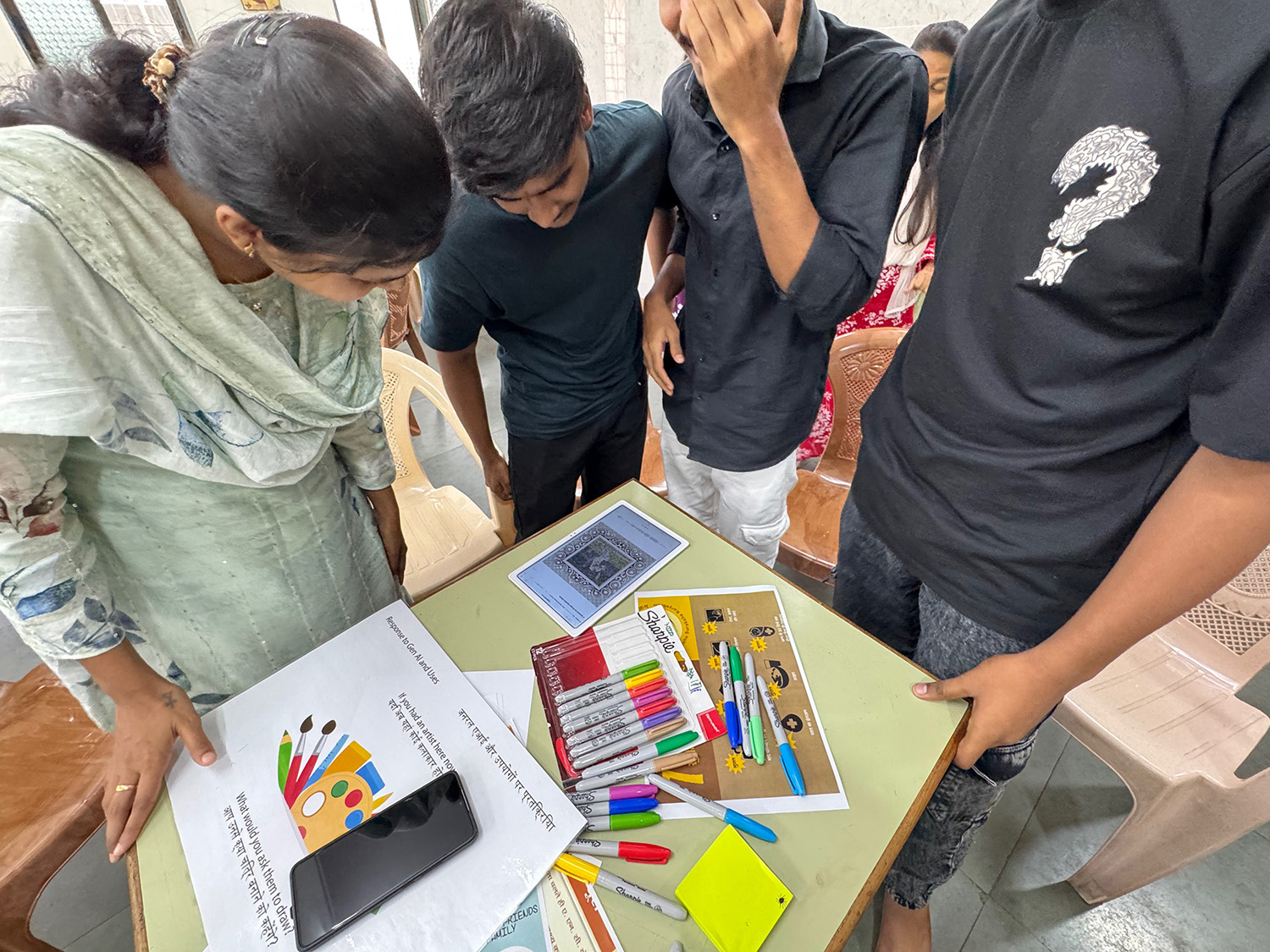
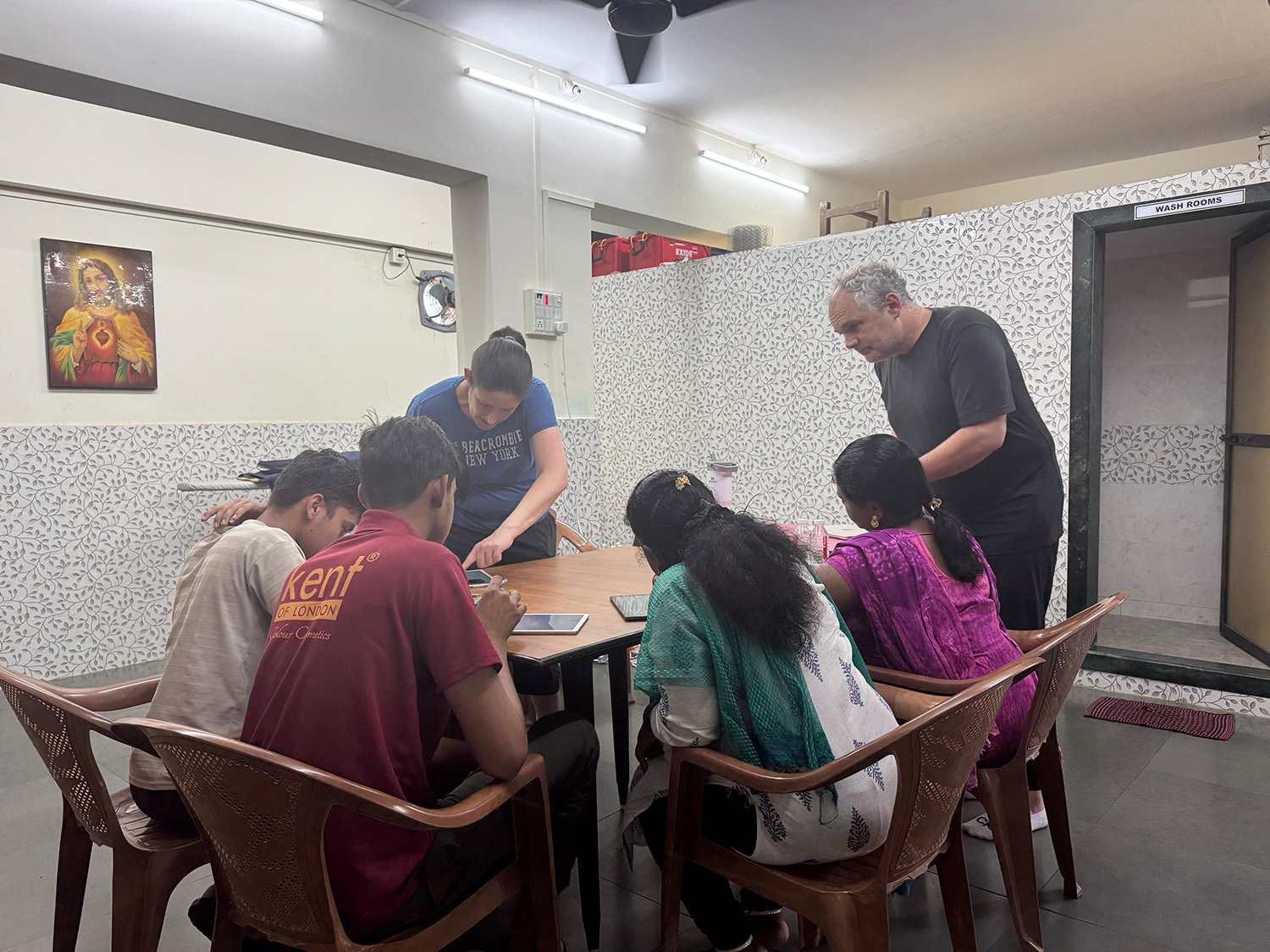
    Workshops held in Dharavi, Mumbai, examined daily routines, emotions and aspirations through activities such as a "day in your life", clay modelling and generative AI demonstrations. These sessions surfaced how residents understand and use technology, and what forms of interactive AI they see as meaningful in their lives.

  • February 2025

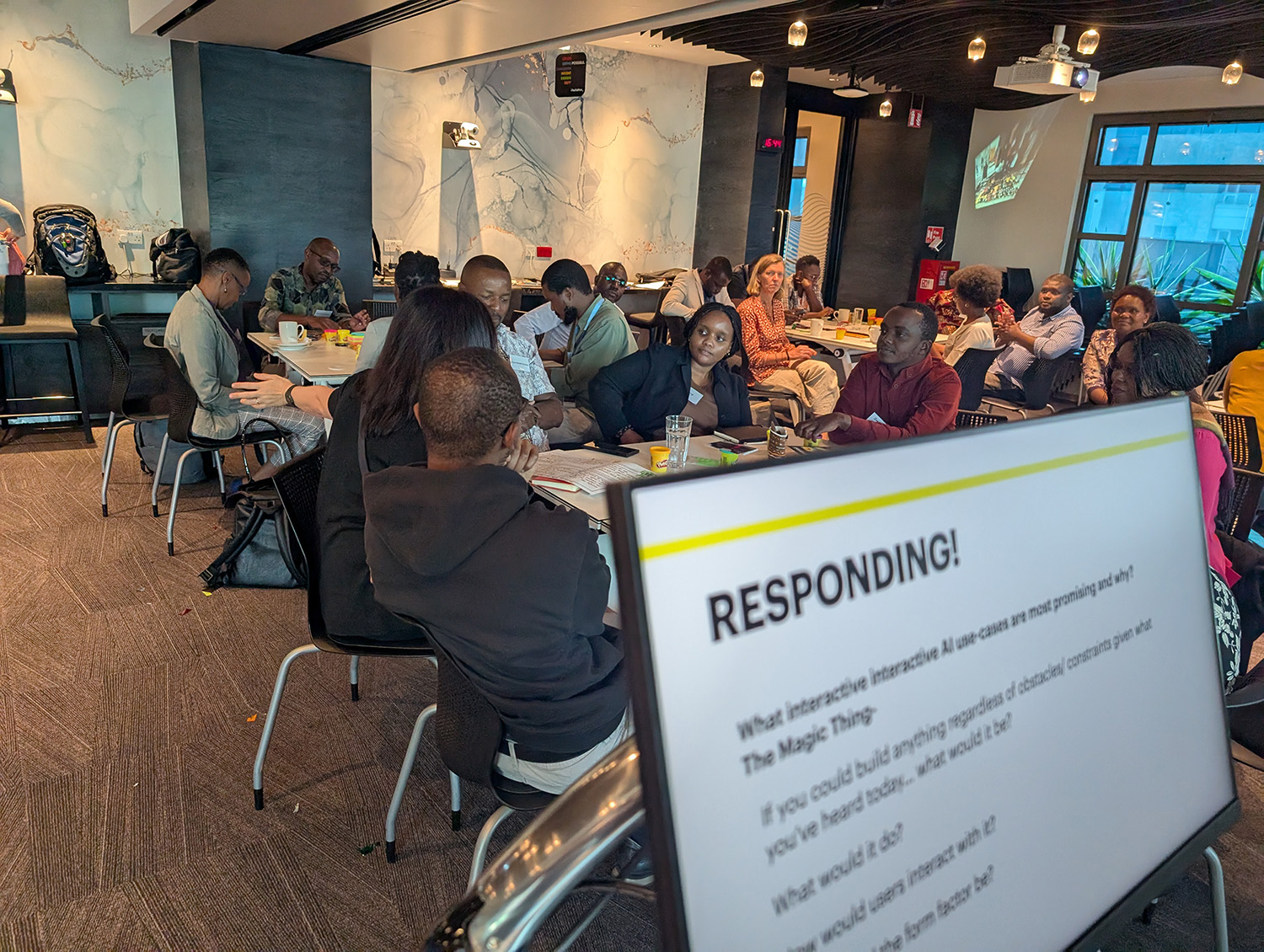
    Workshops in Nairobi with low resource communities explored experiences and expectations of interactive AI, followed by a summit at Microsoft Research Kenya. Participant feedback was highly positive, noting the value of inclusive, problem driven approaches, new ideas for future work and strong networking opportunities. Sessions and logistics were well received, with only minor suggestions for clarification and further practical insights. A fuller reflection is available in our Medium post, Beyond the Valley — Diversifying AI Innovation.

  • June 2025

    Early stage prototyping of new AI devices was carried out with participants in Dharavi and Swansea, using Wizard-of-Oz and co-design sessions to shape a generative video appliance and explore how communities might engage with public AI systems.

  • August 2025

    Evaluation studies of prototype devices were conducted in Dharavi and Swansea, involving in-situ deployments, observation of walk-up and use appliances, and analysis of the kinds of videos people created.

  • September 2025

    Matt Jones delivers his first Gresham Lecture, AI Will Be Your Overlord: Faster, Brighter, Better Than You?, examining public anxieties around AI and discussing how ideas of intelligence, sentience, perception and reasoning are being reconsidered in an AI centred world. The lecture also reflects on the social, economic and ethical implications of these developments.

    This lecture is part of the AI As Your Overlord: Assimilation, Acceptance or Resistance? lecture series.

  • October 2025

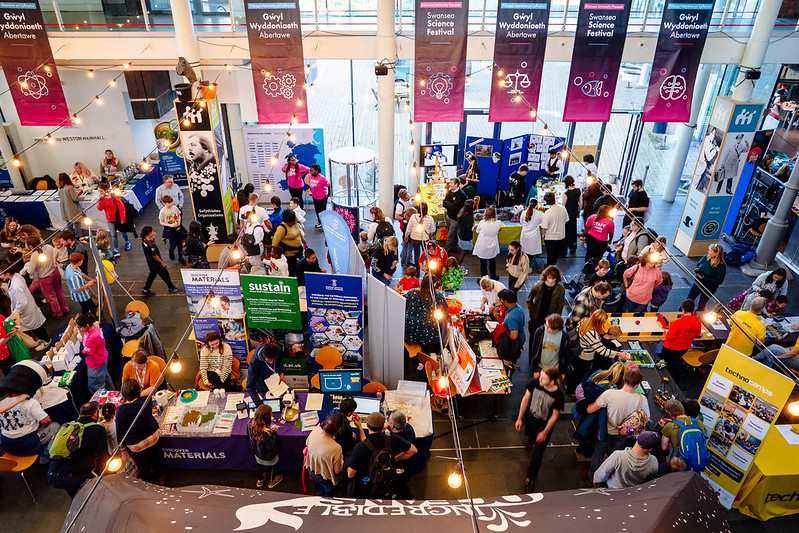
    Participation in the Science Festival Swansea, engaging visitors with project activities and emerging findings. A fuller reflection is available in our Medium post.

  • November 2025

    Matt Jones delivers his second Gresham Lecture, Becoming AI – Your Journey to Assimilation?, looking at how digital services are already making us machine-like; and, we explore how advanced AI-human fusions may undo our essential “humanness”.

    This lecture is part of the AI As Your Overlord: Assimilation, Acceptance or Resistance? lecture series.

  • February 2026

    Matt Jones delivers his third Gresham Lecture, Will You Be AI’s Pet?, exploring how AI may be gently domesticating human life, trading autonomy for comfort and care, and questioning what we gain and what we risk losing in the process.

    This lecture is part of the AI As Your Overlord: Assimilation, Acceptance or Resistance? lecture series.

  • March 2026

    Matt Jones delivers his fourth Gresham Lecture, Born Supremacy – AI as a Pale Shadow of Real Humanity, exploring what it means to remain deeply human in an AI-shaped world, asking how innovation reshapes agency, creativity, and freedom, and ultimately, how can human diversity inform better AI for all?

    This lecture is part of the AI As Your Overlord: Assimilation, Acceptance or Resistance? lecture series.

  • April 2026

    The team attended CHI in Barcelona. Gavin presented the StreetScenes paper, and Simon presented the Less ReDraw paper.

    Matt Jones delivers his fifth Gresham Lecture, Taming AI, exploring how human-centred and responsible AI approaches can help ensure the social benefits of AI outweigh its risks, and how individuals and governments can thrive in an AI-shaped future.

    This lecture is part of the AI As Your Overlord: Assimilation, Acceptance or Resistance? lecture series.

  • May 2026

    Research was presented at IIT Mumbai, where ongoing project work was discussed with Anirudha Joshi and his team. Presentations included work on StreetScenes and LessReDraw,.

  • June 2026

    Matt Jones delivers his sixth and final Gresham Lecture, AI Futures: Waking from the AI as Overlord Spell, examining possibilities to make AI more palatable and proposing a different way of weaving AI into everyday life: as a “simple” instrument that enables our souls to sing.

    This lecture is part of the AI As Your Overlord: Assimilation, Acceptance or Resistance? lecture series.

  • August 2026

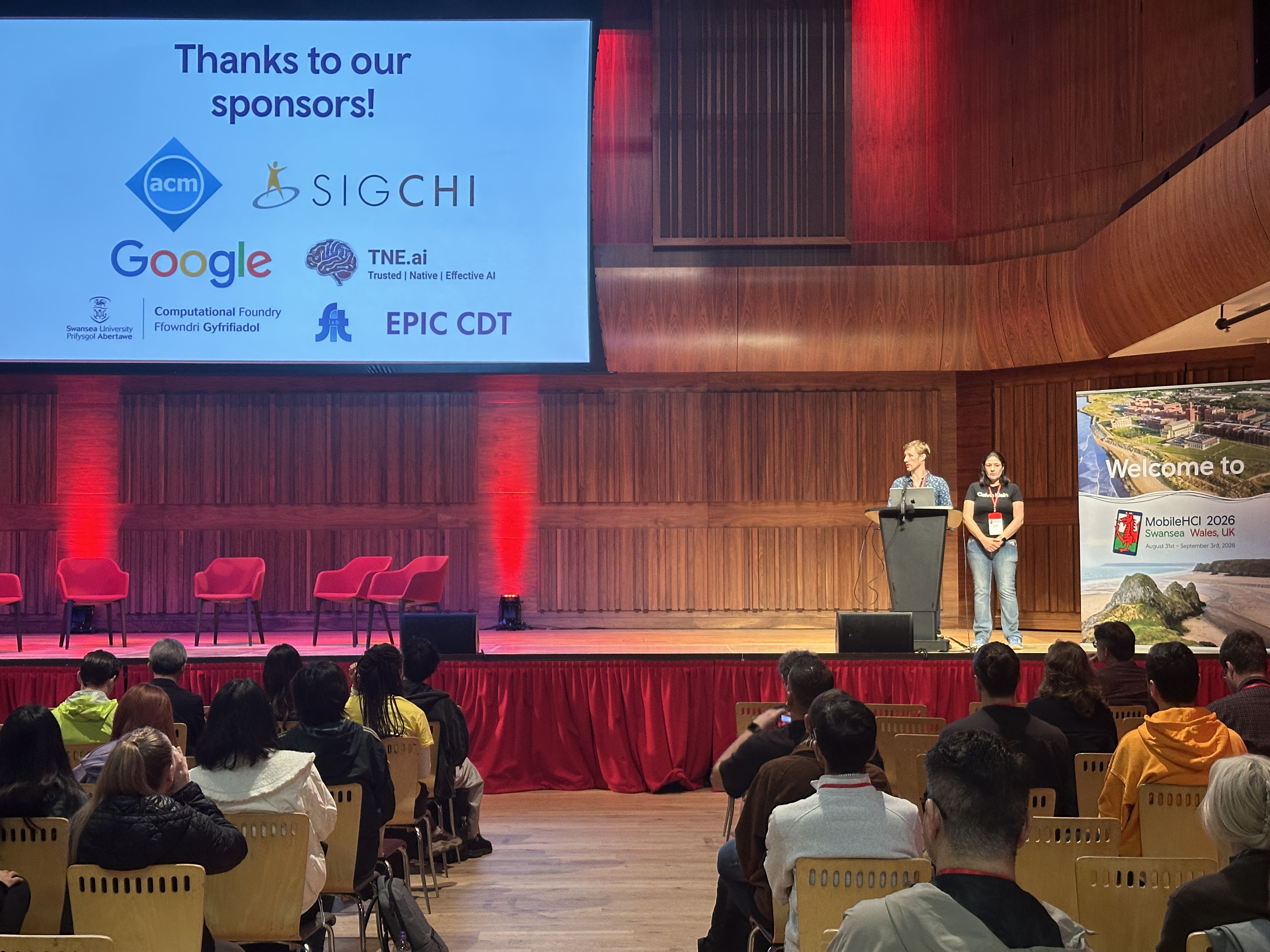
    Swansea University hosted MobileHCI 2026. Matt Jones hosted a panel discussion, while Jen Pearson and Simon Robinson served as General Chairs, Gavin Jones as Local Arrangements Chair, and Thomas Reitmaier as Web, Publicity and Social Media Chair. The event brought together researchers and practitioners working in human–computer interaction and mobile technologies.

Publications

Explore our publications on human-centred AI, creativity, and the future of human experience with technology.

Street Scenes: Public Appliances for GenAI Video in Informal Settlements

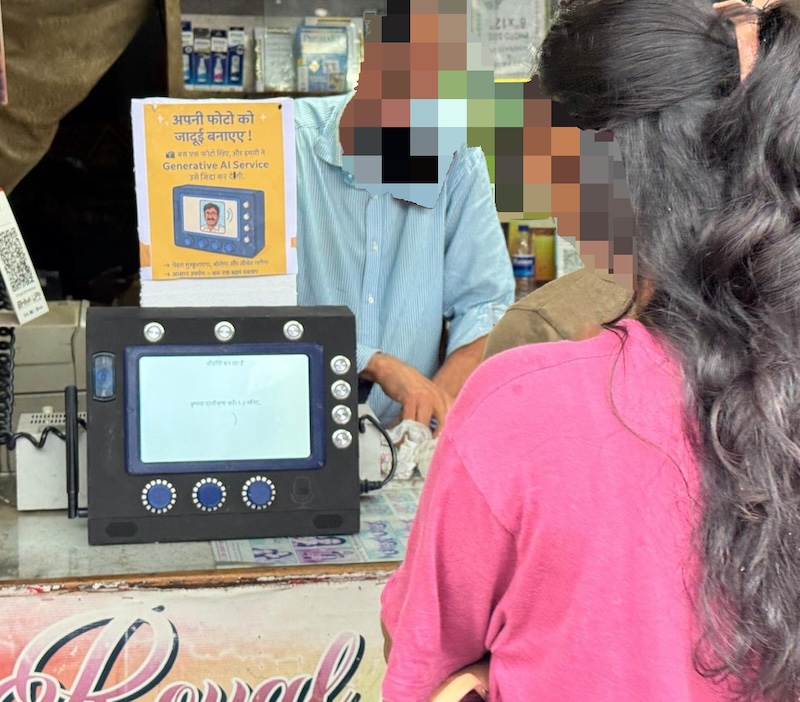
Generative AI is rapidly diffusing worldwide, yet access remains uneven. In informal settlements, barriers of cost, literacy and connectivity can exclude residents from AI-enabled self-expression. This paper presents Street Scenes: a public appliance for walk-up interaction with generative AI video in Dharavi, Mumbai. Inspired by the “Hole in the Wall” computers and previous Dharavi speech deployments, the system lets passers-by capture phone images, add voice-, button- and dial-based prompts, and generate short videos to view and leave locally. We report on ideation workshops, two Wizard-of-Oz prototypes and a 13-day in-situ deployment across Dharavi street locations. Findings show residents appropriating AI for play, self-presentation, small business promotion and community messaging, while also raising concerns about privacy, trust and misuse. We contribute: (1) a model for public AI appliances; (2) empirical insights into community engagement with generative AI; and, (3) design lessons for accessible, equitable and community-governed AI systems.
Less Redraw, More Explore: Suggestion and Completion for Sketch-to-Image

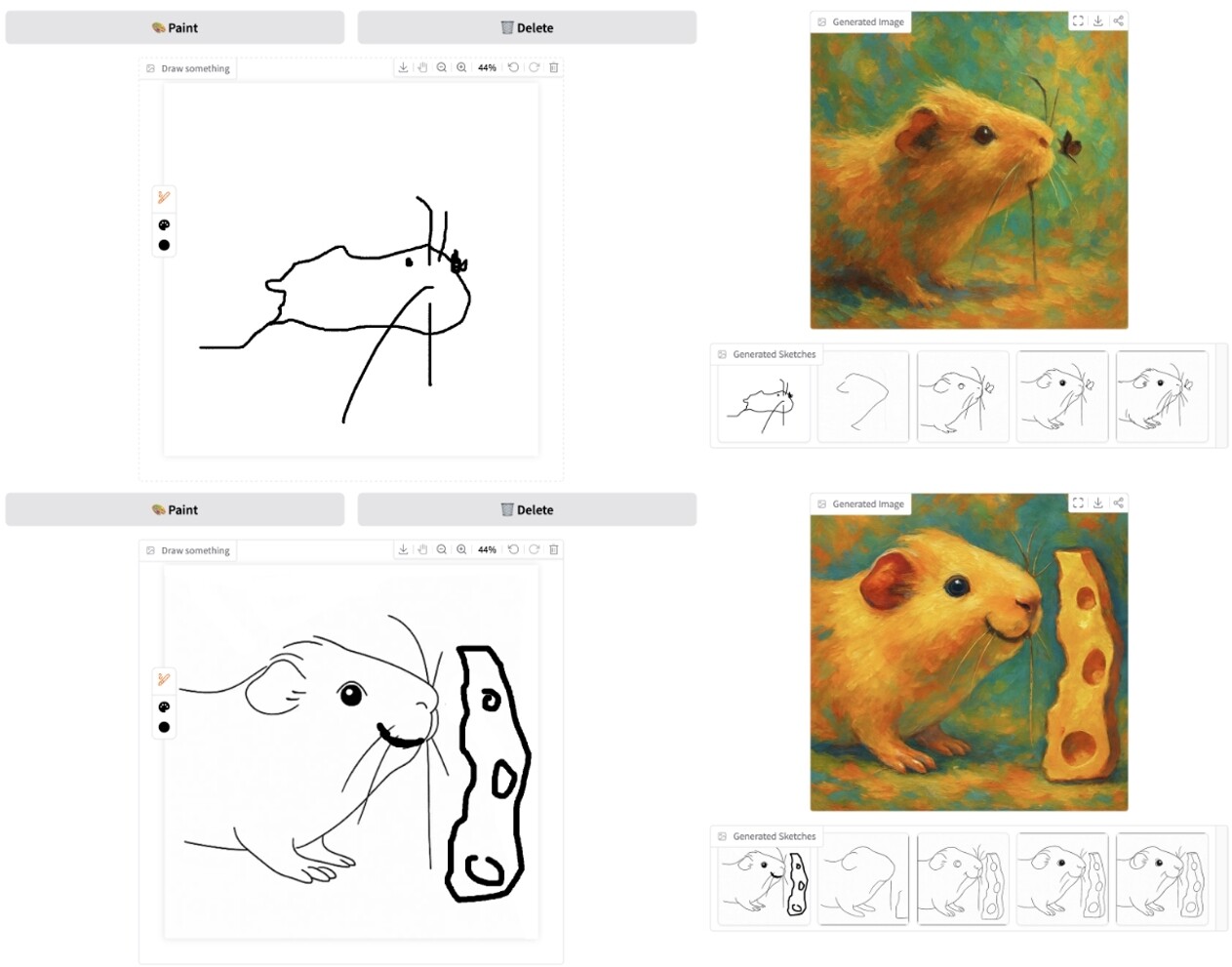
Sketch-to-image systems let users transform simple line drawings into realistic images, but current workflows force users into tedious redraw-regenerate cycles that slow creative exploration. We introduce two complementary interaction techniques that reduce iteration friction: AutoSketch, which extends partial sketches through AI-driven completions (pre-generation support), and BackSketch, which transforms generated images back into editable sketches at multiple abstraction levels (post-generation support). In a study with 30 participants, the results indicate that both techniques can improve exploration and expressiveness compared to a baseline sketch-to-image system, while AutoSketch also can increase users’ sense of agency and co-creation with the AI. We contribute new evidence that shifting support before or after generation opens distinct pathways for balancing user control and system initiative. Together, our results establish pre- and post-generation assistance as a design space for co-creative sketch-to-image systems.

The ORBIT India Dataset: Understanding the Challenges of Collecting a Disability-First AI Dataset in Low-Resource Environments

Computer vision systems are increasingly used by blind individuals to navigate their lives, helping, for example, locate objects such as doors or chairs. Yet these recognition systems do not work for many personal objects a blind user might want to find, such as keys or a special notebook. In response, efforts created personalized recognition systems, where individuals train their phones to identify and locate things, like a coffee mug or white cane, using example images/videos. However, these tools are trained on data from high-resource contexts, not necessarily reflecting India’s material culture. This paper discusses the contribution of the ORBIT-India dataset, which extends these tools to the Indian context, home of the world’s largest blind population. The ORBIT-India dataset comprises 105,243 images from 587 videos, representing 76 unique objects. We use this experience to examine dataset collection practices translated from high- to low-resource settings, providing recommendations to support cross-geography dataset collection.

The Research Team

Professor Matt Jones

Matt Jones is the EPSRC Fellow leading this Programme. He is deeply committed to inclusive, diverse and responsible interactive AI to this end he is the Chief Operating Officer of Responsible AI UK and on the leadership time of EPSRC’s Include+ Network. His work is inspired and driven through long-term engagement in the Global Souths.

Dr Gavin Bailey

Gavin is a research officer at Swansea University. He is the HCI researcher for this fellowship, exploring human-focused, inclusive and diverse interactive AI. Previously, Gavin worked alongside older adults, where self-powered sensors to encourage a growth mindset for ageing-well were developed.

Saskia Davies

Saskia is a Research Officer at Swansea University, working across HCI and AI. Her PhD research investigates affective computing in virtual reality, exploring how physiological sensing can be used to understand cognitive and emotional responses during immersive experiences. Her current research focuses on embodied and human-centred approaches for interactive AI.

Jenna Hopkins

Jenna is a Project Officer, who has spent the last 10 years working on multiple UK and European funded projects. Jenna will be overseeing the financial and administrative aspects for EVE.

Professor Jennifer Pearson

Jen Pearson is a Professor of HCI and Director of Research for the Department of Computer Science in the Computational Foundry, Swansea University. Her primary research interest is centred around so-called emergent communities, learning from them and working with them to co-create digital interactive systems that better suit their contexts.

Professor Simon Robinson

Simon is Professor of Human-Centred Computing at the Computational Foundry at Swansea University. His research focuses on future-looking interaction design with and for people who have historically had limited technology access and inclusion.

Dr Thomas Reitmaier

Thomas is Lecturer in Computer Science at Swansea University. He works on the interdisciplinary UnMute/Ampilfy projects to co-create spoken language interactions with communities of minority language speakers who are currently digitally ‘unheard’.

Alumni

Dr Gesu India

Gesu (she/her) is a Research Assistant at Swansea University. Her research lies at the intersection of responsible AI, human-computer interaction, and accessibility. In her PhD, she designed disability-first participatory methods for AI dataset creation in the Global South. Bringing along her extensive on-ground experience of working with communities, her research currently focuses on co-creating AI technologies that celebrate and harness community power and joy.

Dr Zeyu Zhao

Zeyu is a research officer at Swansea University, specialising in AI applications with a focus on speech technology and advancing speech recognition systems. As an active member of the speech recognition community, Zeyu contributes to the development and refinement of technologies that enhance human-computer interaction through voice. Currently, he is completing his PhD at the University of Edinburgh, where he has conducted in-depth research on speech recognition.

International Advisory Board

The International Advisory Board brings together academic members with experience in innovative training, human-computer interaction, accessibility, computational science, design, and related fields. Their expertise spans research, education, and the development of technologies that support people and communities.

Vint Cerf

At Google, Vint Cerf contributes to global policy development and continued spread of the Internet. Widely known as one of the “Fathers of the Internet,” Cerf is the co-designer of the TCP/IP protocols and the architecture of the Internet. He has served in executive positions at the Internet Society, the Internet Corporation for Assigned Names and Numbers, the American Registry for Internet Numbers, MCI, the Corporation for National Research Initiatives and the Defence Advanced Research Projects Agency and on the faculty of Stanford University. Vint Cerf sits on US National Science Board and is a Visiting Scientist at the Jet Propulsion Laboratory.

Ben Shneiderman

Ben Shneiderman is an American computer scientist, a Distinguished University Professor in the University of Maryland Department of Computer Science, which is part of the University of Maryland College of Computer, Mathematical, and Natural Sciences at the University of Maryland, College Park, and the founding director (1983-2000) of the University of Maryland Human-Computer Interaction Lab. He conducted fundamental research in the field of human-computer interaction, developing new ideas, methods, and tools such as the direct manipulation interface, and his eight rules of design.

Moshe Vardi

Moshe Vardi is an Israeli mathematician and computer scientist. He is a Professor of Computer Science at Rice University, United States. He is an expert in model checking, constraint satisfaction and database theory, common knowledge (logic), and theoretical computer science. He is the author of over 600 technical papers as well as the editor of several collections.

Elisabeth André

Elisabeth André is a full professor of Computer Science and Founding Chair of Human-Centered Multimedia at Augsburg University in Germany. She has a long track record in multimodal human-machine interaction, embodied conversational agents, social robotics, affective computing, and social signal processing. Drawing on the concept of computer-based role play with virtual characters, she has promoted a novel form of experience-based learning, for example, to help children and young people cope with bullying at school, develop intercultural sensitivity or master socially challenging situations, such as job interviews.

Charles (Chuck) Hansen

Charles (Chuck) Hansen is an IEEE Fellow and a Distinguished Professor of Computing in the School of Computing and a founding member of the Scientific Computing and Imaging Institute at the University of Utah. Chuck Hansen has published over 170 peer reviewed journal and conference papers and has been a co-author on three papers recognised with “Best Paper Awards” at the IEEE Visualisation Conference (1998, 2001, 2002). He was twice an Associate Editor in Chief (AEIC) of IEEE Transactions on Visualisation and Computer Graphics. His research has made contributions to the fields of scientific visualisation, computer graphics, parallel computation and computer vision.

Anirudha Joshi

Anirudha Joshi is professor in the interaction design stream in the IDC School of Design, IIT Bombay, India. Anirudha is involved in designing interactive products for emergent users in developing economies. He has worked in diverse domains including healthcare, literacy, Indian language text input, banking, education, and industrial equipment. He received the IFIP Outstanding Service award in 2015 and the IFIP TC13 Pioneer Award in 2019. He is currently the VP Finance on the ACM SIGCHI Executive Committee, a member of the India HCI Steering Committee, and the chair of the INTERACT Steering Committee.

Jinwoo Kim

Jinwoo Kim received his BS degree in computer science and statistics from Seoul National University in Seoul, South Korea. After receiving his masterʼs degree from Courant Institute of Mathematical Sciences (New York University), he continued his study in the PhD program at the Real Time Compilation and Instruction Level Parallel Processing Lab of NYU as a research scientist. He subsequently became involved with the Center for Research in Embedded Systems and Technology (CREST) at the Georgia Institute of Technology in Atlanta, Georgia where he spent another two and half years conducting research funded by the Department of Defense, Hewlett-Packard and the State of Georgia.

Our Partners

We are keen for everyone and anyone to be part of this mission

GET IN TOUCH